Global Financial Services Analysis GLOBAL
International banking trends, fintech disruption, and financial market analysis across multiple regions.
Research
Parallel Decline: Two Economies, One Disease
parallel-decline-timeline.html
Mark Sibthorpe with AI assist
In light of a recent RBC report documenting Canada's flight of capital I created an infographic. The infographic is a map Canada's Finance Minister Scorecard against U.S. policy parallels — how FIRE dependency, fiscal erosion, and the hollowing of productive economies are degrading both currencies, at different speeds.
Canada's Finance Ministers: A Scorecard
finance-minister-scorecard_final.html
Mark Sibthorpe
A weighted evaluation of seven Ministers of Finance from 2002 to present — tracking fiscal discipline, economic diversification, the growing FIRE dependency, and whether anyone is building a productive economy.
Interactive Analysis: Existential Threats to Visa/Mastercard's Payment Network Dominance
Mark Sibthorpe with AI assist
Visa and Mastercard control approximately 87% of US credit card purchase volume, processing $10.7 trillion in combined US transactions annually. This dominance has persisted for decades, but a convergence of regulatory action, vertical integration by competitors, alternative payment rails, and technology gatekeepers is creating the most significant structural pressure the duopoly has faced.
U.S. banking, payments, AI & financial services events 2026
Mark Sibthorpe
U.S. banking, payments, AI & financial services events 2026 with links to each event web site.
Banking & financial services events in Canada 2026
Banking_Events_Canada_2026v2.pdf
Mark Sibthorpe
A summary of bank events, payment events, AI, data and analytics in Canada.
Rapid rate hike analysis: Big 6
Mark Sibthorpe
This report examines key financial metrics for Canada's six largest banks — BMO, BNS, CIBC, National Bank, RBC, and TD — using regulatory data filed with the Office of the Superintendent of Financial Institutions (OSFI) for the period ending 2021-12-31 through 2025-12-31. The analysis focuses on how the Bank of Canada's rapid rate-hiking cycle affected funding costs, asset yields, margins, profitability, and capital adequacy across these institutions.
Foreign assets held by Canadian banks overview document
Foreign assets held by Canadian banks overview document (2).pdf
Mark Sibthorpe
Canadian banks, apart from the Big 5, have generally avoided foreign diversification. All of the Big 5 have a significant foreign presence, however, RBC’s massive diversifactation ($1.86T foreign assets, 37% revenue) eclipses its rivals. Whereas, National Bank has also proven highly competitive, despite its domestic focus.
Methodology
This document looks at 4 categories of Canadian banks via charts. The charts are derived from OSFI data which provides details with respect to foreign operations held by Canada’s domestic banks. I have categorized them as Small/Medium, Mid-Tier, Large and Big 5.
The purpose is to provide a snapshot on foreign diversification and to demonstrate how banks have benefited from diversification. I summarize the how, why and where for each of the banks that met the criteria, and to determine the impact on revenue and risk management.
Part 2: The Merchant Loyalty Industrial Complex Collapse
Mark Sibthorpe
This report digs under the surface and uncovers why loyalty is going the way of the dodo.
Merchants should not waste time fighting card networks
Mark Sibthorpe
The full story of SVB March 12th, 2023
Mark Sibthorpe
March 2023 bank earnings summary
Mark Sibthorpe
Real estate report: October 30th, 2020
Mark Sibthorpe
VersaBank’s New High-Security VPN Proving Especially Valuable During COVID-19 Pandemic
TailscaleReleaseMarch30FINAL.pdf
Press Release
2014 FSIM when Bernanke visited Montreal
Mark Sibthorpe
Eisman's big Canadian bank short
Mark Sibthorpe
VersaBank Beta-Testing Its New, High Volume Mortgage Finance App
VBCortelMortFinanceAppFeb62020.pdf
Press Release
How and why you need to defend your brand against disruptors
Mark Sibthorpe
Kick the can(nomics)
Mark Sibthorpe
ScoreCard Bill Morneau, Canada's Minister of Finance
Mark Sibthorpe
This report is a scorecard I designed in order to rank the performance of the current Minister of Finance, Bill Morneau. I do regular rankings because, otherwise, I cannot measure the performance in a meaningful way. The scoring is based on a variety of metrics as detailed on the ‘score-table’ on page 3. Examples of the criteria and weighting include:
Observations and overview of 2018 NB flood support from government and insurance companies.
Observations and overview of 2018 NB flood support from government and insurance companies..pdf
Mark Sibthorpe
Flood aftermath is linked to post traumatic stress. Here are some findings from a study conducted by Queensland University following a flood:
"The findings showed that aftermath stress contributed to poor mental health outcomes over and above the flood itself, prior mental health issues and demographic factors," Ms Dixon said.
"Aftermath stress was the strongest predictor of post-traumatic stress symptoms with 75 per cent of people saying the most difficult aspect was the aftermath and dealing with insurance companies," she said.
With this in mind, I felt it was important to understand how New Brunswick flood victims were treated.
Update Argentina: a sign of the times
Update Argentina_ a sign of the times.pdf
Mark Sibthorpe
Argentina is in the news daily because the situation is dire, and may be an indication of further contagion. The most dramatic story that speaks of the a leading cause of its troubles was the recent arrest of the public works secretary, Jose Lopez. June 15th he was caught hiding millions in cash in a monastery. No this is not a plot for a comedy.
Summary of Canada's flood news, 2017 to present
Summary-of-flood-news-2017-present.pdf
Mark Sibthorpe
Banking on Pot
SBS
Canadian banking industry overview
Mark Sibthorpe
Introduction
Small banks
Small medium sized banks
Medium sized banks
Medium large banks
2014 Mobile payments the Apple pay way
Mobile_Payments_Apple_Pay_2014.pdf
Mark Sibthorpe
The book is a prelude to Walmart leaving MCX, and chronicles the evolution that led to Walmart Pay. There is an extensive case study of Walmart that looks into its efforts to become an ILC and to avoid paying credit card transaction fees ('merchant discount').
It offers readers a step-by-step methodology for evaluating and transforming credit and loyalty programs. The strategies are based on proven examples and industry facts. The Nectar, Target, Canadian Tire and Walmart case studies are examples of the practical approach I have taken, written with the intent that merchants can use them as blueprints for their own initiatives.
Death to bitcoin, long live the blockchain
Mark Sibthorpe
TD bank industry conduct
Mark Sibthorpe
This report chronicles the events leading up to the collapse, shows TD's performance, analyses other related issues.
Book review: Back from the Brink
Mark Sibthorpe
Footnote 151
Mark Sibthorpe
Save the Canadian economy now
Mark Sibthorpe
This report assesses the issues at hand and recommends the solution to get Canada's economy on track.
Reasons financial service companies should consider gamification
GamingEventProposal-printsample--en-final.pdf
Mark Sibthorpe
National Bank Special Report
Mark Sibthorpe
Will Canadian banks charge companies for deposits?
Mark Sibthorpe
Canadian Tire's (CTC) - Canadian Tire Financial Services (CTFS) Scotia deal overview and risk assess
Mark Sibthorpe
Finance minisiter scorecard August 26, 2015
Mark Sibthorpe
Xtreme Branch
Mark Sibthorpe
Canadian Nudge
Mark Sibthorpe
CWB cause for concern
Mark Sibthorpe
BNTV Overview
BNTV
- Analytics
- Financial services industry monitor (FSIM) industry briefings and developments reports
- Research
Challenger banks not a threat to big banks
Mark Sibthorpe
Gamification of financial data project
GamingEventProposal-printsample--en-final_original.pdf
Mark Sibthorpe
The impact a rate rise will have for Canadian banks
Mark Sibthorpe
FIFA: the new goldenballs
Mark Sibthorpe
Scorecard Minister of Finance: JIm Flaherty
Scorecard Min Fin Flaherty April 8 2014.pdf
Mark Sibthorpe
Merchants extend financial services
Mark Sibthorpe
Hot Money: real-estate
Mark Sibthorpe
Currency Cheat Sheet: a guide for the rest of us
Mark Sibthorpe
Riches to Rags? Summary of possible risks for Genworth MI CANADA, INC.
Mark Sibthorpe
Canadian Western Bank Competitive Forecast
Mark Sibthorpe
Liquid Canada: the tipping point
Mark Sibthorpe
Bank Fees
Mark Sibthorpe
Cheap Oil Report
Mobile Payments Blueprint: guide to credit and loyalty transformation for merchants
Guide to system selection
News feed
THESE YOUTUBE FINANCIAL INFLUENCERS WHO CAN DRAIN YOUR PORTFOLIO
TVA (2026-04-15)
Four in ten Canadians follow at least one finfluencer — a term for finance-focused influencers — primarily on YouTube, Facebook, and Instagram. However, according to a Swiss Finance Institute study cited in a report by Option consommateurs, 56% of these online gurus are unqualified to provide investment advice, and their recommendations lead to abnormal monthly returns of -2.3%.
PARALLEL DECLINE: TWO ECONOMIES, ONE DISEASE
BankNews.TV - Mark Sibthorpe (2026-04-15)
Prompted by a recent RBC report documenting Canada's flight of capital, BankNews.tv has produced a new infographic mapping the parallel economic decline of Canada and the United States. The visual analysis pairs with the publication's recent Finance Minister Scorecard, offering a side-by-side look at how policy decisions in both countries are eroding fiscal health.
US BANK RESULTS AS THEY HAPPENED: JPMORGAN AND CITI POST BUMPER PROFITS AS IRAN WAR BOOSTS TRADERS
FT (2026-04-15)
Volatile markets drove a rise in first-quarter profits at three of Wall Street's biggest banks, as their trading businesses benefited from geopolitical upheaval. JPMorgan reported net income of $16.5bn, up from $14.6bn a year ago, marking the bank's second-best quarter ever. Chief executive Jamie Dimon said the US economy "remained resilient" even as concerns mount about the effect of higher oil prices.
BLACKROCK QUARTERLY PROFIT BOOSTED BY ETFS AND PERFORMANCE FEES
MarketBeat (2026-04-15)
BlackRock delivered a strong first quarter of 2026, with adjusted earnings per share and revenue surpassing consensus estimates. The asset management giant's results were driven by higher investment fees and robust performance fees, propelling shares higher in early trading.
FSIM briefings and developments reports
Search Tips: Enter one or more keywords separated by spaces. All keywords must match (AND logic). Examples: RBC | mortgage rates | TD loans | Bank of Canada inflation
Global Financial Analysis

Survey: 1 in 3 Canadians carry credit card balances

Does AI mean the end of banking?

VersaBank: The small/medium bank with a relatively big U.S. presence

How the US will Inflate its Debt Away

TD Bank Releases ALARMING Report About State Of Ca

Why are Interest rates not falling.

Does Printing Money Cause Inflation?
HSBC, the Untouchable Titan of Global Finance

US Economist’s Shock Warning: “Biggest Crash in Ou

Toni Gravelle Speech
Alberta Premier on the Supreme Court\'s ruling, an


Horrific Canadian Banking Corruption Right Before

The Banking System is in Free-Fall

The Financialization of Real Estate

The FDIC Threatens Downgrades That Will Cut Off Ac

Are we in a bubble and, if so, when will it pop?
BOC and reconciliation with Indigenous people

Central bank digital currencies: foundational prin
Real estate: fiscal conservatism/ponzi neoliberali
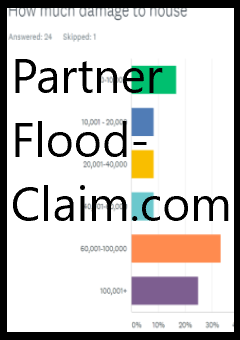
Why insurance should partner with flood-claim.com
Current state of fintech in Canada
XE.com explains their Big Data and AI strategy.

Insurance flood US vs Can comparison.